

In recent years, the concept of a home workout has evolved from a temporary solution into a long-term fitness lifestyle for millions of people. Busy schedules, limited access to gyms, financial considerations, and the desire for privacy have encouraged individuals to explore exercise routines they can perform right at home. The good news is that with the right structure and consistency, a home workout can deliver impressive results in strength, endurance, flexibility, and overall health.
A home workout removes common barriers such as commuting time, waiting for equipment, or feeling uncomfortable in crowded spaces. It allows you to design a fitness routine that fits your daily life and personal preferences. With only a small space and minimal equipment, anyone can begin a productive exercise routine and steadily work toward their fitness goals.
Why Home Workouts Work Benefits and Science
Home workouts are effective because they rely on the core principles of fitness: movement, progressive challenge, and consistency. You don’t need expensive machines or large spaces to build strength or improve cardiovascular health.
Convenience and Flexibility
The ability to exercise at any time removes excuses. Whether it’s early morning or late evening, you control your schedule, which increases consistency.
Full-Body Fitness Potential
A home workout can include strength exercises, cardio movements, balance work, and flexibility training. This combination creates a well-rounded fitness routine that improves overall performance and health.
Cost-Effective and Accessible
Bodyweight exercises alone can challenge muscles effectively. Optional tools like resistance bands or light weights can further enhance your routine without major investment.
Sustainable for Modern Lifestyles
For people balancing work, family, and responsibilities, home workouts provide a practical, long-term solution that adapts to individual needs.
Setting Up the Perfect Home Workout Space
Creating a comfortable workout space helps you stay consistent and focused.
Clear and Safe Area
You only need enough room to move freely. Make sure the floor is safe, non-slippery, and free from obstacles. A mat can provide cushioning and comfort.
Minimal Equipment for Maximum Effect
While not required, a few items can improve your sessions:
- Resistance bands
- Light dumbbells or household items as weights
- A sturdy chair for support exercises
- A mat for floor movements
Lighting and Airflow
A well-lit and ventilated area keeps you energized and comfortable during exercise.
Core Components of a Balanced Home Workout Routine
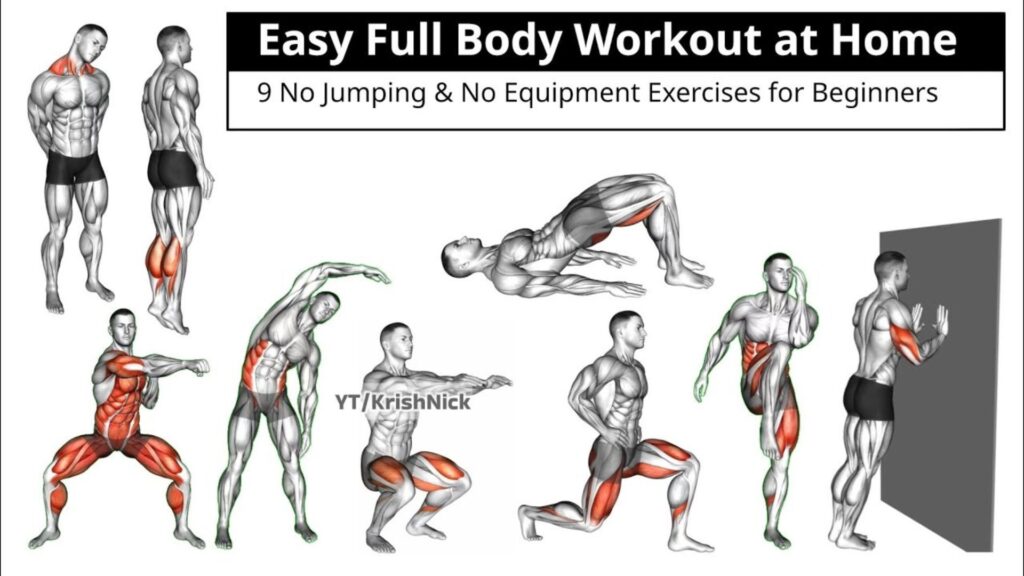
An effective home workout plan should include four key elements.
Cardiovascular Endurance
Cardio improves heart health and burns calories. Examples include:
- Jumping jacks
- High knees
- Jogging in place
- Burpees
Strength Training
Strength exercises build muscle and increase metabolism:
- Push-ups
- Squats
- Lunges
- Planks
Flexibility and Mobility
Stretching enhances joint health and reduces injury risk. Include warm-up stretches before workouts and cool-down stretches afterward.
Rest and Recovery
Rest allows muscles to repair and grow. Light movement on rest days can aid recovery.
Best Home Workout Exercises for Every Fitness Level
Beginners
- Wall push-ups
- Chair squats
- Marching in place
- Knee planks
These movements build confidence and proper form.
Intermediate
- Standard push-ups
- Bodyweight squats
- Walking lunges
- 30–60 second planks
These exercises improve endurance and strength.
Advanced
- Jump squats
- Plyometric lunges
- Burpees
- Resistance band exercises
These add intensity and challenge.
Tips to Stay Consistent and Motivated
Make It a Routine
Treat your home workout like an appointment. Fixed timing builds discipline.
Track Progress
Record reps, time, and intensity to measure improvement.
Set Realistic Goals
Start small and increase gradually to avoid burnout.
Add Variety
Rotate exercises to keep sessions interesting.
Involve Others
Working out with family members can increase accountability and fun.
Common Home Workout Mistakes to Avoid
Lack of Structure
Random exercises without a plan limit results. Follow a routine.
Skipping Warm-Ups
Warm-ups prepare muscles and reduce injury risk.
Ignoring Proper Form
Correct technique is more important than speed or quantity.
Overtraining
Rest is essential for progress. Avoid exercising intensely every day.
Tracking Progress and Adjusting Your Routine
As you grow stronger, your home workout must become more challenging. This is known as progressive overload.
You can achieve this by:
- Increasing repetitions
- Reducing rest time
- Adding resistance
- Trying more advanced variations
Review your performance every few weeks and adjust your routine accordingly.
Conclusion
A home workout is one of the most practical, affordable, and effective ways to stay fit. With consistency, structure, and gradual progression, you can achieve excellent fitness results without ever needing a gym. Whether your goal is strength, endurance, weight management, or overall wellness, a well-planned home workout routine can help you transform your health from the comfort of your own spa
FAQs
How often should I do a home workout?
Aim for 3–5 sessions per week lasting 20–45 minutes.
Do I need equipment for a home workout?
No. Bodyweight exercises are highly effective, though simple tools can enhance results.
Can a home workout help with weight management?
Yes. Combining cardio and strength exercises supports calorie burn and muscle development.
What is the best time for a home workout?
Any time that fits your schedule and allows consistency.
How can I stay motivated to work out at home?
Set goals, track progress, follow a routine, and add variety to your exercises.
