
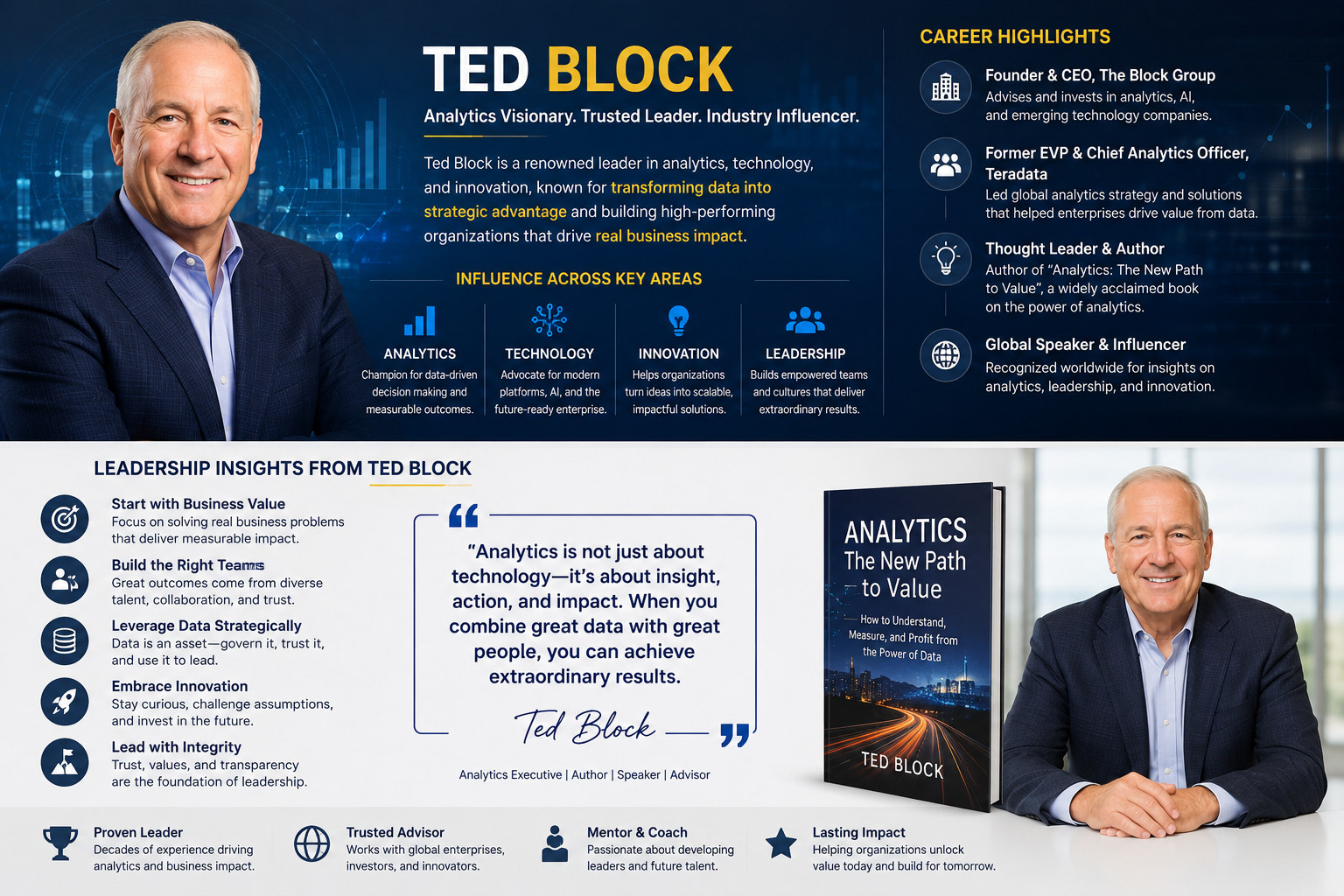
Modern organizations generate more information than at any other point in history. The challenge is no longer collecting data but understanding it well enough to make better decisions. This shift has elevated the importance of analytics professionals who can translate complex information into practical business strategies.
Ted Block has built a professional reputation in this environment through leadership in analytics, business intelligence, and technology-driven decision-making. His career reflects a broader transformation across industries where data has become a strategic asset rather than a byproduct of operations.
Examining the career path of Ted Block provides insight into how analytics leadership has evolved and why organizations increasingly rely on professionals who can connect technical expertise with business objectives.
Understanding Ted Block’s Professional Background
Ted Block is known for his work in analytics leadership, where data, technology, and strategy intersect. His professional experience demonstrates how analytical thinking can influence organizational decisions, improve operational efficiency, and support long-term growth.
The rise of digital platforms has changed how businesses operate. Companies now monitor customer behavior, product performance, operational metrics, and market trends in real time. Managing this information effectively requires leaders who understand both the technical and strategic dimensions of analytics.
Rather than viewing data as a collection of numbers, successful analytics professionals treat it as a source of insight. This perspective has become increasingly important as organizations seek to make decisions based on evidence rather than assumptions.
Ted Block’s career reflects this philosophy, emphasizing the practical application of analytics to real business challenges.
Building a Career in Analytics and Technology
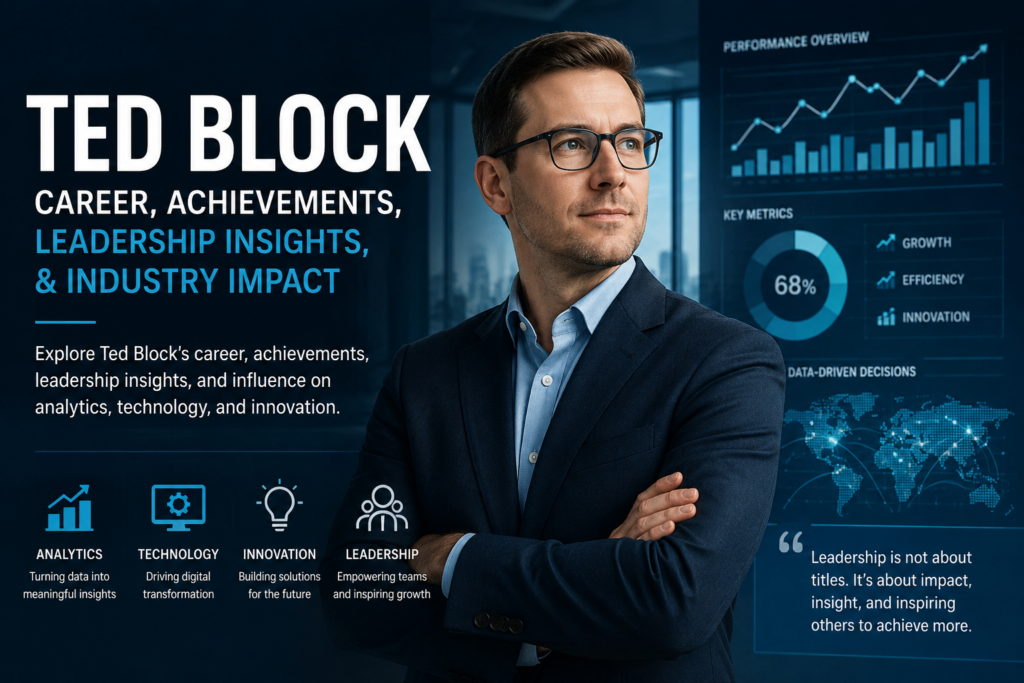
The analytics profession has changed dramatically over the past two decades. Early business intelligence systems focused primarily on reporting historical information. Today, organizations use predictive models, machine learning, and advanced analytics to anticipate future outcomes.
Professionals who adapted to these changes gained opportunities to take on broader leadership responsibilities. Success in this field requires more than technical knowledge. It also demands communication skills, strategic thinking, and an understanding of organizational priorities.
Building a career in analytics often involves mastering several disciplines simultaneously:
- Data analysis
- Statistical interpretation
- Business intelligence tools
- Strategic planning
- Team leadership
- Technology implementation
Professionals who combine these capabilities are often positioned to guide major business initiatives and influence organizational direction.
Ted Block’s professional development aligns with this evolution, reflecting the growing role of analytics leaders within large technology-focused organizations.
Leadership in Data-Driven Organizations
Analytics teams are no longer isolated support functions. In many organizations, they play a central role in product development, customer experience improvement, operational planning, and executive decision-making.
Leading these efforts requires a unique combination of skills. Analytics leaders must understand technical systems while also communicating findings to stakeholders who may not have specialized data expertise.
Effective leadership in this environment depends on several core principles.
Turning Information Into Action
Data becomes valuable only when it informs decisions. Organizations often possess extensive information but struggle to convert it into practical recommendations.
Strong analytics leaders focus on identifying insights that can drive measurable improvements. This involves prioritizing clarity, relevance, and business impact rather than simply generating reports.
Aligning Analytics With Business Goals
Successful analytics initiatives support larger organizational objectives. Whether improving customer retention, optimizing operations, or identifying growth opportunities, analytical work must connect directly to strategic priorities.
Leaders who understand this relationship help organizations maximize the value of their data investments.
Building Collaborative Teams
Analytics projects frequently involve multiple departments. Product managers, engineers, marketers, finance professionals, and executives may all contribute to the decision-making process.
Collaboration ensures that analytical findings are understood and applied effectively across the organization.
Contributions to Business Intelligence and Analytics
The growth of business intelligence has transformed how organizations evaluate performance. Instead of relying solely on historical reporting, companies increasingly use advanced analytics to identify trends and anticipate future developments.
Analytics leaders contribute to this process by establishing frameworks that support informed decision-making.
Key areas of impact often include:
Performance Measurement
Organizations require reliable metrics to evaluate success. Analytics teams help define, monitor, and interpret these measurements.
Meaningful performance indicators provide leaders with a clearer understanding of progress and areas requiring attention.
Strategic Planning
Analytics supports planning by identifying opportunities, risks, and emerging trends. Decision-makers can use these insights to allocate resources more effectively and prioritize initiatives with the greatest potential value.
Operational Efficiency
Data-driven analysis often reveals inefficiencies that would otherwise remain hidden. Organizations can use these findings to streamline processes, reduce costs, and improve overall performance.
Customer Understanding
Businesses increasingly rely on analytics to understand customer behavior. Insights into preferences, engagement patterns, and purchasing decisions help organizations develop more effective products and services.
These contributions highlight why analytics leadership has become an essential function in modern enterprises.
Professional Achievements and Industry Influence
A successful analytics career is measured not only by technical accomplishments but also by the broader impact created within organizations and industries.
Professionals who lead analytics initiatives often influence how companies approach innovation, decision-making, and long-term growth.
Several forms of achievement are particularly significant in this field.
Creating Data-Driven Cultures
Organizations achieve greater value from analytics when data becomes part of everyday decision-making. Leaders play a critical role in promoting this cultural shift.
Building a data-driven culture requires education, communication, and consistent demonstration of analytical value.
Supporting Innovation
Innovation depends on understanding both opportunities and constraints. Analytics helps organizations evaluate ideas, measure outcomes, and refine strategies based on evidence.
This capability has become especially important in technology-driven industries where competitive advantages can change rapidly.
Developing Future Leaders
Strong leaders create opportunities for others to grow. Mentorship, knowledge sharing, and team development contribute to long-term organizational success.
Analytics leaders often help shape the next generation of professionals entering the field.
What Makes Effective Analytics Leadership
The demand for analytics expertise continues to grow, but technical proficiency alone is rarely sufficient for leadership roles.
Several characteristics consistently distinguish effective analytics leaders.
Curiosity
Curiosity drives exploration and discovery. Leaders who ask thoughtful questions often uncover insights that others overlook.
Communication
Complex information must be communicated clearly. Effective leaders translate technical findings into language that supports decision-making.
Adaptability
Technology evolves rapidly. Professionals who embrace change are better positioned to lead organizations through periods of transformation.
Strategic Perspective
Analytics leaders must understand how individual findings connect to broader business objectives. This perspective enables them to focus on initiatives that create meaningful impact.
Accountability
Strong leaders take responsibility for results and ensure that analytical work contributes measurable value.
These qualities help organizations move beyond data collection and toward informed action.
Lessons From Ted Block’s Career Journey
The professional path of Ted Block offers several lessons for individuals interested in analytics, leadership, and technology.
One important lesson is the value of combining technical expertise with business understanding. Organizations rarely need analysis for its own sake. They need insights that support decisions and improve outcomes.
Another lesson involves continuous learning. Analytics tools, technologies, and methodologies change regularly. Professionals who invest in learning remain prepared for new challenges and opportunities.
The importance of communication is equally significant. Even the most sophisticated analysis has limited value if stakeholders cannot understand or apply its findings.
Finally, successful careers often result from focusing on impact rather than process. Professionals who solve meaningful problems create lasting value for their organizations.
The Future of Analytics Leadership
The future of analytics will likely be shaped by advances in artificial intelligence, automation, and machine learning. These technologies are expanding the scope of what organizations can accomplish with data.
However, technology alone will not replace leadership. Human judgment remains essential when evaluating priorities, interpreting context, and making strategic decisions.
Analytics leaders will continue to play a critical role in helping organizations navigate complexity. Their ability to combine technical knowledge with business insight will remain a valuable competitive advantage.
As industries become increasingly data-driven, professionals who develop these capabilities will be positioned to influence strategy, innovation, and organizational success.
Conclusion
Ted Block’s career reflects the growing importance of analytics leadership in modern business. His professional journey highlights how data, when paired with strategic thinking and effective leadership, can drive meaningful organizational outcomes.
The evolution of analytics has created new opportunities for professionals who can connect technical expertise with business objectives. Leaders in this field help organizations make better decisions, improve performance, and adapt to changing market conditions.
The lessons associated with Ted Block’s career remain relevant for anyone pursuing a future in analytics, technology, or leadership. Technical skills matter, but lasting impact comes from the ability to translate information into action and guide organizations toward informed, evidence-based decisions.
Frequently Asked Questions
Who is Ted Block?
Ted Block is an analytics and technology professional recognized for leadership in data-driven decision-making and business intelligence.
What field is Ted Block associated with?
His professional work is associated with analytics, data science, business intelligence, and technology leadership.
Why is analytics leadership important?
Analytics leadership helps organizations interpret complex data, improve decision-making, and align insights with strategic objectives.
What skills are essential for analytics leaders?
Key skills include analytical thinking, communication, strategic planning, leadership, problem-solving, and business understanding.
What can professionals learn from Ted Block’s career?
His career highlights the importance of continuous learning, cross-functional collaboration, data-informed decision-making, and connecting technical expertise with business value.
