

Neil Gorsuch is one of the most influential legal figures in modern American jurisprudence. Since joining the Supreme Court in 2017, he has played a defining role in shaping constitutional interpretation and statutory analysis. His approach reflects a deep commitment to textual interpretation, judicial restraint, and adherence to the original meaning of the law. Through his opinions and legal reasoning, he has contributed significantly to the direction of the highest court in the United States. Understanding his journey provides valuable insight into how judicial philosophy affects real-world legal outcomes.
Early Life and Formative Years
Born in Denver, Colorado, Neil Gorsuch grew up in an environment that valued public service and intellectual debate. His mother held a prominent federal administrative role, which exposed him early to governance and legal frameworks. This upbringing fostered curiosity about the law and encouraged a disciplined academic path. His early education in prestigious institutions shaped his analytical thinking and prepared him for the rigorous studies that would follow.
Academic Excellence and Legal Scholarship
Gorsuch’s academic journey reflects consistent excellence. He completed undergraduate studies with honors before earning a law degree from Harvard Law School. Later, he pursued advanced legal philosophy studies at Oxford University, focusing on complex ethical issues related to law and human rights. These academic experiences helped him develop a deep understanding of both legal structure and philosophical reasoning. This blend of scholarship later became visible in his detailed judicial writing and methodical legal analysis.
Climbing the Judicial Ladder
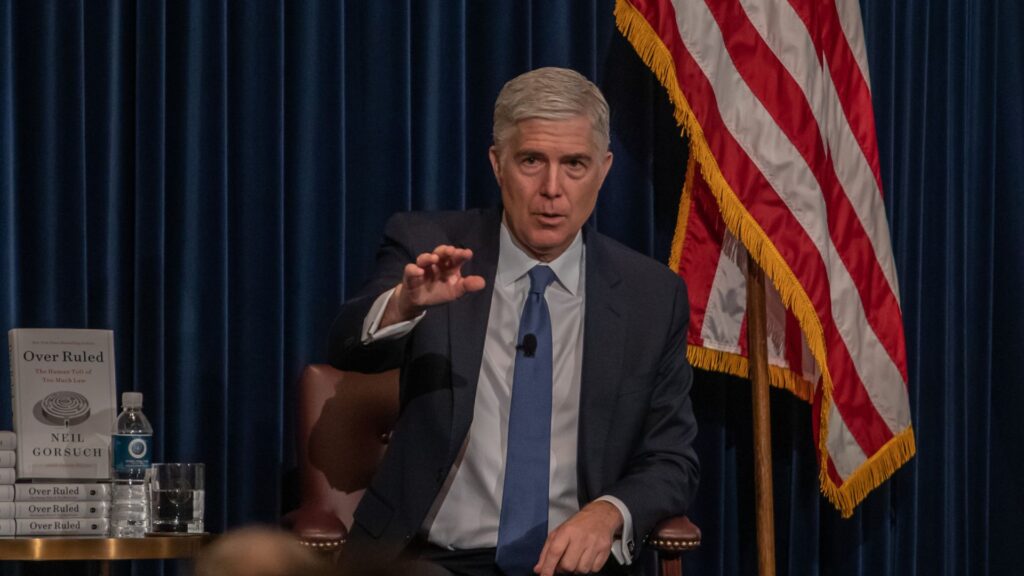
Before his appointment to the Supreme Court, Neil Gorsuch built a strong professional foundation. He clerked for respected federal judges and Supreme Court justices, gaining firsthand insight into appellate law. After years in private legal practice and service within the Department of Justice, he was appointed to the United States Court of Appeals for the Tenth Circuit. There, he developed a reputation for clarity in legal reasoning and careful interpretation of statutes, qualities that later defined his role on the Supreme Court.
Supreme Court Nomination and Confirmation
In 2017, Neil Gorsuch was nominated to fill a vacant seat on the Supreme Court. His confirmation process drew national attention and involved intense political debate. Despite the controversy, he was confirmed by the Senate and took his seat as an Associate Justice. This moment marked the beginning of a new chapter for the Court, as his judicial philosophy closely aligned with a textual and original understanding of the Constitution.
Judicial Philosophy and Interpretation
At the core of Neil Gorsuch’s work lies a commitment to textualism and originalism. He believes that judges must interpret the law based on the words written and the historical meaning those words carried when adopted. This approach limits judicial activism and places responsibility for legal change on the legislative branch. His philosophy emphasizes the rule of law, separation of powers, and predictability in judicial decisions.
Landmark Opinions and Legal Influence
During his time on the Court, Neil Gorsuch has written several opinions that have influenced American law in meaningful ways. His writings often show independence and careful thought rather than simple ideological alignment. He has addressed cases involving civil rights, administrative authority, criminal justice, and federal powers. These opinions demonstrate how textual analysis can lead to impactful and sometimes unexpected legal conclusions.
Contemporary Issues and Public Role
Beyond court decisions, Neil Gorsuch has engaged in public discussions about the role of the judiciary in a modern democracy. He has emphasized the importance of maintaining judicial independence and confidentiality while also supporting civic education. His outreach efforts show that he views the judiciary not only as a legal institution but also as a pillar of public understanding and trust.
Neil Gorsuch’s Impact on the Judiciary
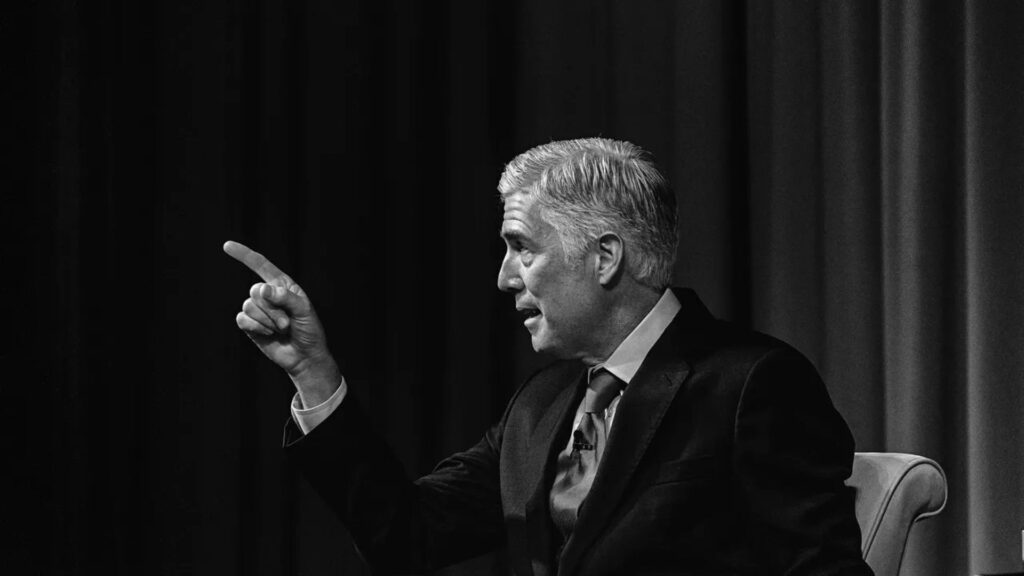
The influence of Neil Gorsuch extends beyond individual rulings. His consistent application of legal principles has contributed to ongoing debates about how courts should interpret laws. Legal scholars frequently analyze his opinions as examples of disciplined judicial reasoning. His work encourages a return to foundational principles that guide constitutional interpretation.
Future Prospects and Broader Legacy
As his tenure continues, the legacy of Neil Gorsuch will be evaluated through the lens of his written opinions and judicial consistency. Future generations of legal professionals will study his reasoning to understand how textual interpretation shapes legal systems. His influence is likely to remain significant in discussions about constitutional law and the proper role of judges
Conclusion
The career of Neil Gorsuch offers a compelling example of how academic rigor, professional discipline, and judicial philosophy come together on the nation’s highest court. From his early life to his influential role on the Supreme Court, his journey reflects dedication to the law’s original meaning and careful interpretation. His presence continues to shape legal thought and judicial practice across the United States.
FAQs
Who is Neil Gorsuch?
Neil Gorsuch is an Associate Justice of the United States Supreme Court appointed in 2017.
What is his judicial philosophy?
He follows textualism and originalism, focusing on the plain meaning of legal texts.
Why is his role significant?
His opinions influence how courts interpret statutes and constitutional provisions.
What experience did he have before the Supreme Court?
He served on the Tenth Circuit Court of Appeals and worked in both private practice and federal service.
How does he contribute outside the courtroom?
He participates in public discussions about judicial independence and civic understanding.
